During CTS Week Two, we watched the movie Objectified by Gary Hustwit, a filmmaker responsible for the “Design Trilogy”: Objectified, Urbanized, and Helvetica. We also analyzed the movie’s CD hull and cover design and worked as a group to distill the major points of the movie in relation to our discipline and our objects, and then compiled this group work on the wall of the studio. I will be punctuating my notes taken during the movie with photographic documentation of the session.
Objectified Movie Notes:
Perception
- You always make judgements about everything you see
- Cost, weight, use, make, etc.
- You very rarely think about everything that went into it, how it was made, and how it was intended
Every part of our world is designed. The best designs are things that look like they have not been designed at all.
The Human Principles of Design (as listed by Gary Hustwit)
- Innovative
- Useful
- Aesthetic
- Makes something understandable
- Honest
- Lasts a long time
- Eco friendly
- Every single facet is design
- “So wenig Design wie moeglich” (As little design as possible)
Design Thinking
- Make things systematic
- Mind mapping
- Inspiration
- Go to places that you’ve never been before
- Look at people and make a connection with them in their context
- Be inspired by their environment
- Try and Try Again
- It takes many more iterations to get through something than you think
- Experiment
- Look for an excuse to use different materials
- Cool stuff you keep to be inspired by
- Analyze the base form, function, and look about this
- Look into the future
- What’s going to happen, not what has happened
- Philosophy
- Offer products you want to keep
- Will stand the test of time
- Working in a team can give different ideas
- Look for an excuse to use different materials
Past Ideas for Future Change
- We still have a strong relationship with physical products
- Like it or not, the world is a visual one
- Physical interpretation of the digital age
- We live in the third technological revolution
- We are building stage sets that have nothing to do with the age in which we live
- Revisiting the archetype
- The past defines the future
- Modern design is often a combination of the digital and the analog, however, there are significant differences in the priorities and ways in which these objects are designed
- Analog
- Function, form, and look are combined
- Digital and modern world
- Form and function do not correspond
- Revolutionized by the microchip
- Analog
As Designers:
- We Should Ask:
- Would I want it?
- Why is it pretty?
- Why do you like it?
- Are the things we are doing making a change?
- What are the cultural implications?
- There are cultural contexts in which certain functionalities make sense
- Japanese toothpick rest
- There are cultural contexts in which certain functionalities make sense
- We Should Think:
- What it is people need to be designed?
- What are the extremes?
- To design, you need to know the extremes, the middle takes care of itself
- How can we do studies around people and what they need?
- Analyze life, anatomy and user experience
- You are designing life, after all
- What does design mean to the consumer?
- Everyone presents themselves to the world in a certain way
- Understanding the psychology of design is important
- Everyone presents themselves to the world in a certain way
- We Should Imagine:
- How that designed object will impact lives
- Can do it via showrooms
- Present the object in its setting to show a better life
- How we can handicap technology to work with people
- Redefine terminologies
- What is a robot
- Redefine terminologies
- How that designed object will impact lives
- We Should Try:
- To give your own meaning to it and give that to others
- Living Objects
- To make the object give emotion to someone
- You want memories to be made
- Consider what makes something sacred, important, fun,
- Design for debate
- To put the motion to a still object
- The viewer makes it move
- To have a sense in a product of the hierarchy
- What is important
- What is not important
- The considered solution
- To look at design in a contextual sense
- Human object relationship
- Technological capabilities and interactions with the design and users around it
- To control ergonomics
- To make constant mock-ups and review
- To make gadgets perform better while still addressing the design brief
- To give your own meaning to it and give that to others
- We Are:
- Defined by the way you look at the world
- Constantly designing
- Constantly asking what it is, why it is
- Looking at form, what it’s made of, why that is
- Made to design nature, we design our world
- Meant to interact with the use
- Our job is to design a better experience
- Good at understanding the world and people’s needs, sometimes better than people themselves do
- We design the space and products to make people feel good
- Combat excess and unthoughtful work
- Our hearts and souls should go into our designs. “Every object has a story, you must only know how to read it.”
Interaction between the Consumer and the Object
- People think they’re stupid for not using a product correctly, but really, they should demand design works for them
- Usage
- Some things get better with use
- You want people to become fonder over time
- Design is taken for granted
- Everything that is happening is an interaction between design, the user, and the object
- By writing simply, the audience is drawn in
- People are creative by nature and are never quite satisfied with design
- Can we engage with people’s creativity to help them make what they like?
- Can we give them the platform and the tools to do so?
- This is the nature of the consumer
Companies and Consumerism
- Companies want more stuff and want more people to buy it
- Consumers
- We tend to want new things
- Just look at Apple
- Trying to design what’s very new and very next is difficult, because it’s not very forever, someone is always trying to beat the game
- Consumers want the newest
- Democratizing design
- Elitism and design are linked, but shouldn’t be
Presentation and Production
- If a form works so well with a product, sometimes it does not even look designed
- The form enables the product
- One piece does the work of six
- Design is really the search for form
- Remove what is unnecessary
- Design is about mass production and serialized goods reaching the populace
- Designing standardized mechanisms for broad consumer use
- The Chinese emperor who standardized arrows for more effective military use
Sustainability
- Newest and biggest design challenge
- Designers tend to design for the 10 percent that already has too much
- Design a way to revolutionize form, materials, and make them all sustainable
- Think about what happens after we have used our designs
- Cradle to grave concept
- How do you make something sustainable, reusable, last longer, sustainable?
Take a Step Back
- Look at what you have. At the end of the day, you will always choose the objects that make you who you are. Those are the ones that matter.
Examples
- Chair manufacturing line
- Incredible amount of work that goes into in
- Machinery
- Apple
- Case study in good design
- The designers spoke through the product
- IKEA
- Design should not cost more
- Target
- Good design made available for everyone
- Cars
- Addressing the idea of cars in the future
- Dyson
- Color and function which breathe the essence of form and function
People and Objects to Research
- Karim Rashad
- Japanese Sole Bag
- Marc Newson
Commentary:
- Our objects: have they been designed? Do they look it?
- These are the objects which mean the most to us. A lot of us are coming from different parts of the world and could not take everything with us. This plays into the question, if you have twenty minutes before the hurricane strikes, what would you take?
- How does language and culture play into all of this?
- Once something goes wrong, you realize everything that had to go right.
- Think about this in relation to design and everything that designers think of to make you not notice.
- I thought it was a very interesting concept to have the word “past” in relation to design be defined as everything designed until that very second of design
- Could you make a product that looks like an ornament, but is actually highly functional?
- Perfume bottles
- The idea of favoring mass communication over mass production I think is a very important one. This is also where the idea of minimalist design and designing by taking away everything which is unnecessary comes into play.
The CD
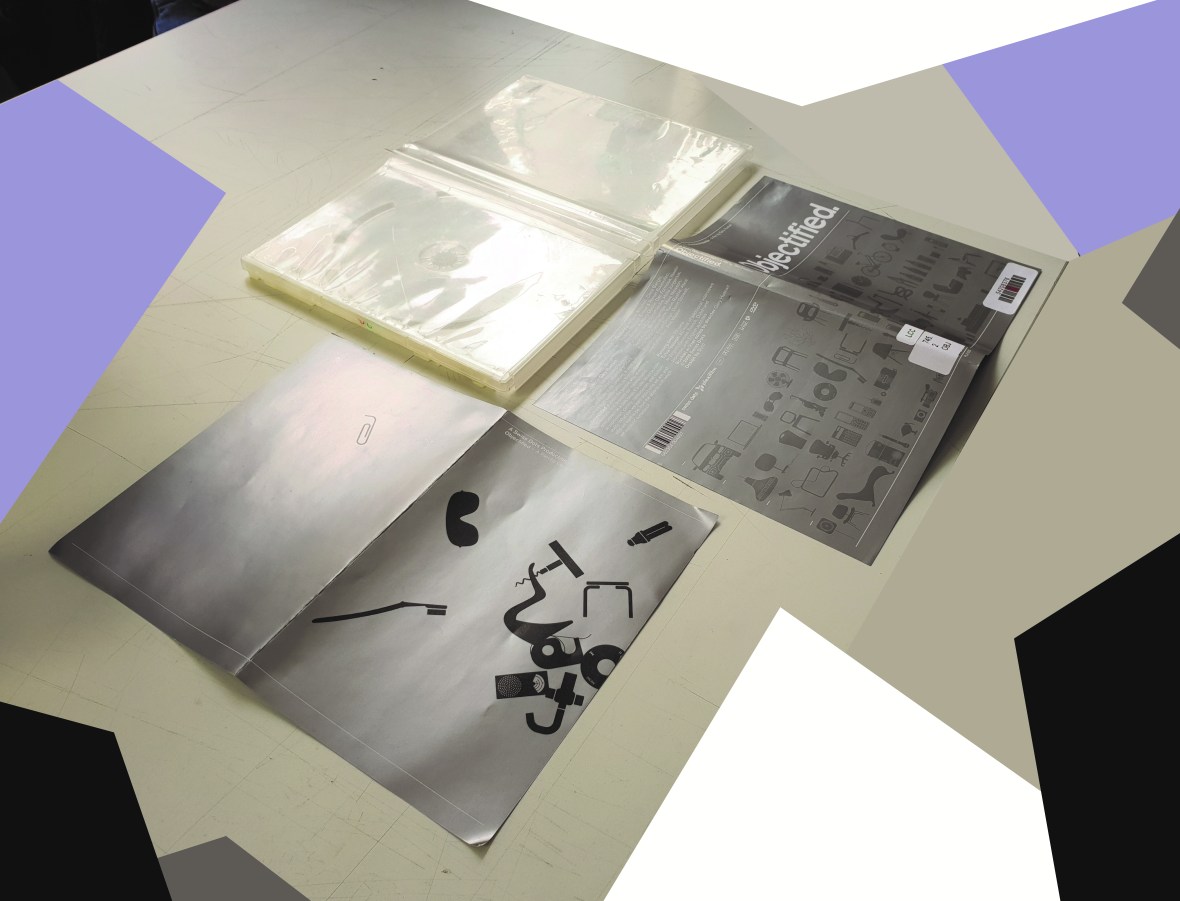
In addition to the movie, we did an out-of-the-box, or in this case, out-of-the-case exercise in which we had to analyze the three components of the CD hull which held the Objectified CD. The three components and my take on them are as follows:
- The Plastic Hull
- This is not the most sustainable choice which could have been made; instead, try biodegradable plastic or a naturally-based material
- It fits the design brief by allowing the Inlay to show through without being damaged
- The Steel Gray Inlay
- The silhouetted variety of objects on the cover both reflect the title “objectified” and show the broad breadth of objects we tend not to think about as being designed
- The simplicity of the cover also speaks to the creator’s view that good design is design which is clean, clear, and communicative
- The Graphic Insert
- The colors are slightly different on the insert than on the front cover, with black instead of gray, however the theme is consistent
- The inclusion of the paper clip on the back of the booklet and the scattering of different silhouetted objects not only draws the audience’s attention, but prompts them to more closely examine the items; if things are out of order, most people will take a second look at it, whereas a pattern or orderly sequence will not have the same affect
- The inclusion of the paper clip in isolation also highlights the idea that even paper clips are designed, and that you truly do not think of them as such
- The steel gray or metallic color throughout is also a well-placed reference to the film’s focus on industrial design and a production for the masses, as well as to its first scene, which includes no humans at all, but rather only machines
Group Work
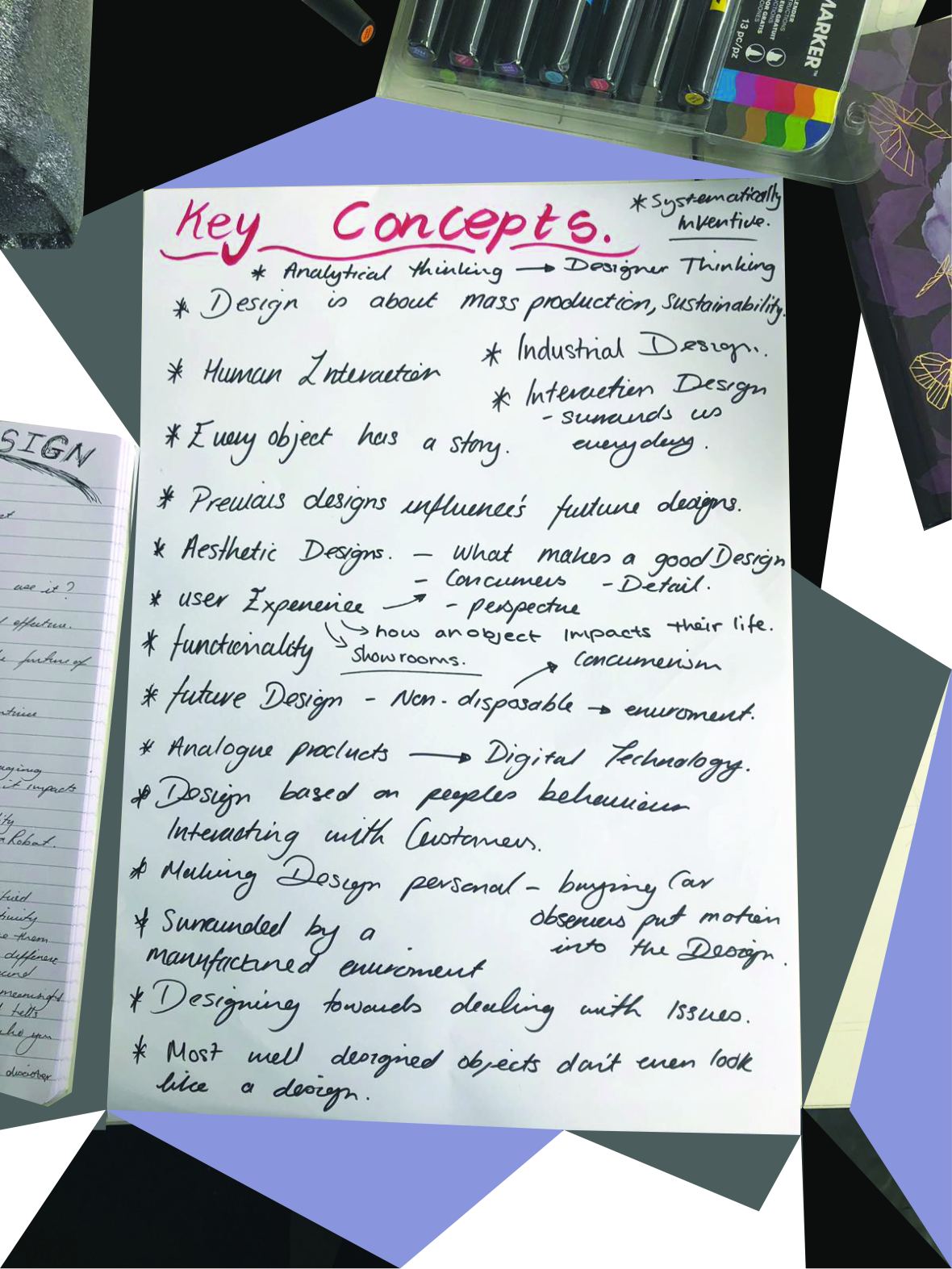
The Key Concept Sheet we compiled as a group, taken from our individual notes from the film Objectified.
The Key Concepts the class compiled from our individual notes. Each group found similar results and how this film connects to our personal objects.
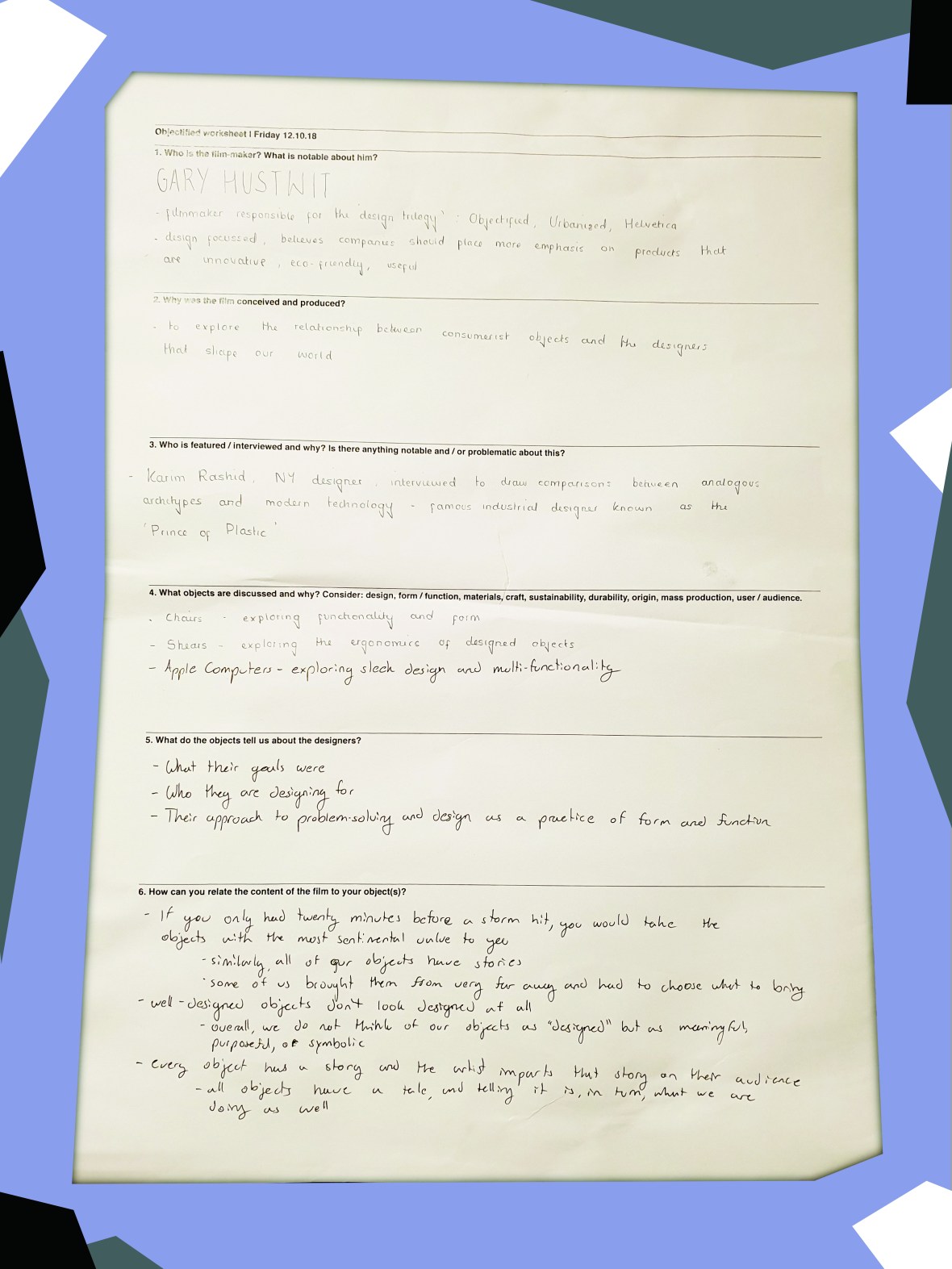
The worksheet we completed about the film at the end of class. Conclusion: the film is relevant to our current project about personal objects because of their sentimental value, individual stories, and the fact that they do not really look designed, but rather just are.
CD in cover photo courtesy of www.pixabay.com.
 Karo.Design