General Notes
- The photography area is completely open-access
- You don’t need to know anything about photography to use the areas
Booking and Availability
- Studios are available 9-5 Monday through Friday
- ORB
- Copy stand
- 3D Table
- Technicians
- Larger studios
- Spinning Tabletop
- Open Access
- Darkroom
Research and Preparation
- Come in with a general idea of what you want to do
- You can change during the shoot, this is part of the creative process, but it is very important that you do have an idea to know where to start
- Show examples of the type of photograph you want to take, including lighting, styling, and the set
- This is based on the photographic technical effects, NOT on what is actually in the picture
- Explain to the technicians what you want and they will be able to help you
- Use examples and moodboards
- Background
- Styling
- Lighting
- Props
- Accessories
Techniques and Possibilities
- The studio works heavily with digital cameras
- Equipment for this is provided in the studio
- YOU MUST BRING A USB
- Analog photography and experimentation is encouraged
- You must then find your own camera
- You can get a camera from the kit room
- There is a cross-over between the digital and analogue techniques
- Louis, who does the more analogue stuff, is in on Tuesdays, Wednesdays, and Thursdays
- Dropping off film
- Put BW film in the white envelope with name and number
- Put coloured film in beige envelope with name and number
- Cannot do slides or transparencies
The Different Areas
- The Big Studio
- Designed for larger shots
- Usually not 100% quiet
- Has studio flash photography lighting
- Has LED lighting for continuous exposure for videos
- This has its limits
- Studio is available for ½ day slots, which you have to book with the technicians themselves
- Backdrops
- White
- Green
- Black
- Use colour gels for colours
- 3D Tabletop
- Used for smaller objects
- Continuous lighting which can be marginally adjusted
- Colours
- Black
- Grey
- White
- Used to photograph objects head-on or from above
- Books, portfolios, products, sculptures, etc.
- Limited range of use
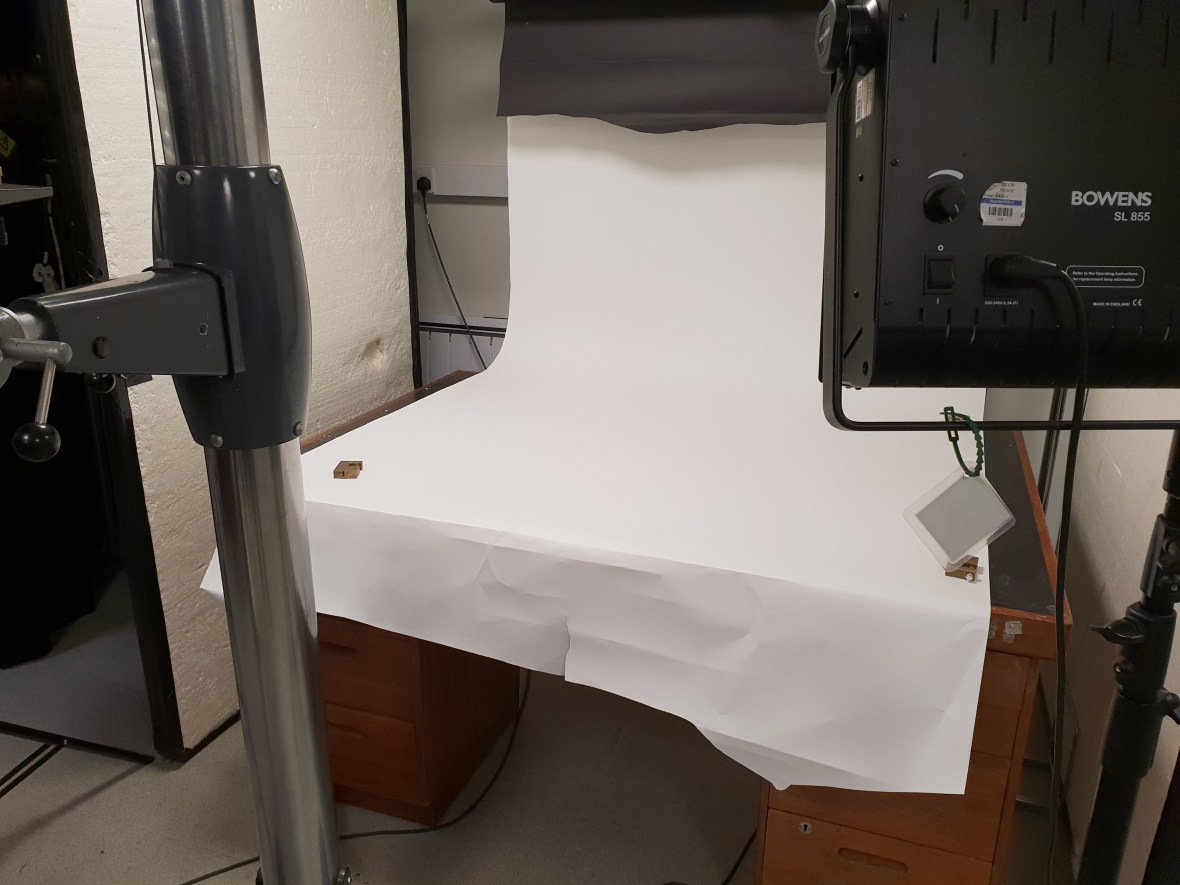
- Spinning Tabletop
- Talk to Simon about this
- It rotates 360 degrees and hold up to 100 kg
- Can be used for full views of products, books, portfolios, etc.
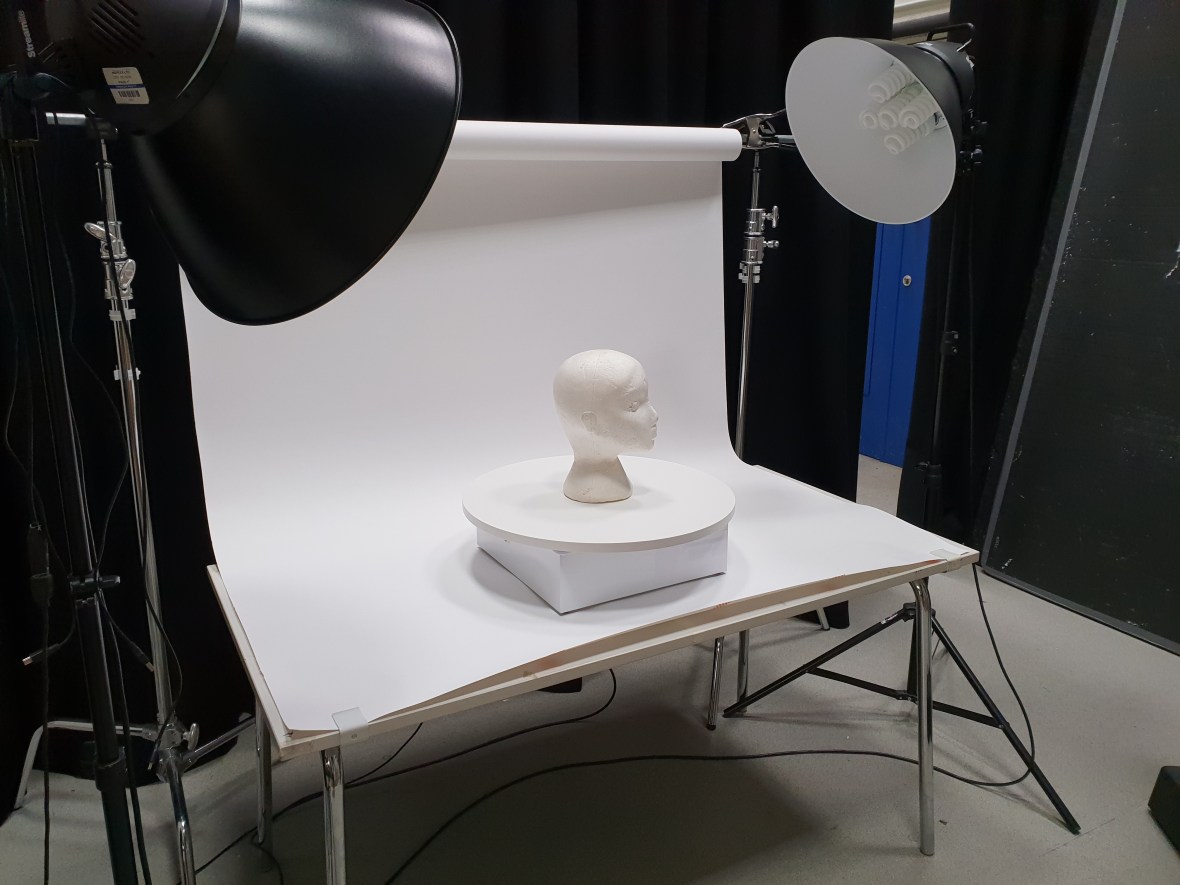
- Emergency White Room
- Used for emergencies only, when you have to shoot something for the next day or so
- MUST bring your own camera
- The Darkroom
- Used for analogue development
- Only black and white film can be developed here
- There is orange light which does not harm the paper for black and white, but messes with the colourful film
- Equipment in the room
- 5 chemical baths
- Enlargers
- Materials provided
- Photosensitive paper
- Mixed chemistry


- The Copy Stand
- Rules
- The camera remains fixed while you work
- It moves up and down on a track
- Everything is done via the computer
- Capabilities
- Frame-by-frame animation
- Can photograph anything which is flat
- Can photograph a drawing to turn into a print
- Digitalizing whatever you’d like
- Can photograph glossy objects
- Can create a video of flipping through a book
- Rules


- The Smaller Studio
- Loud because of the darkroom next door
- Ideal for smaller projects or silent video
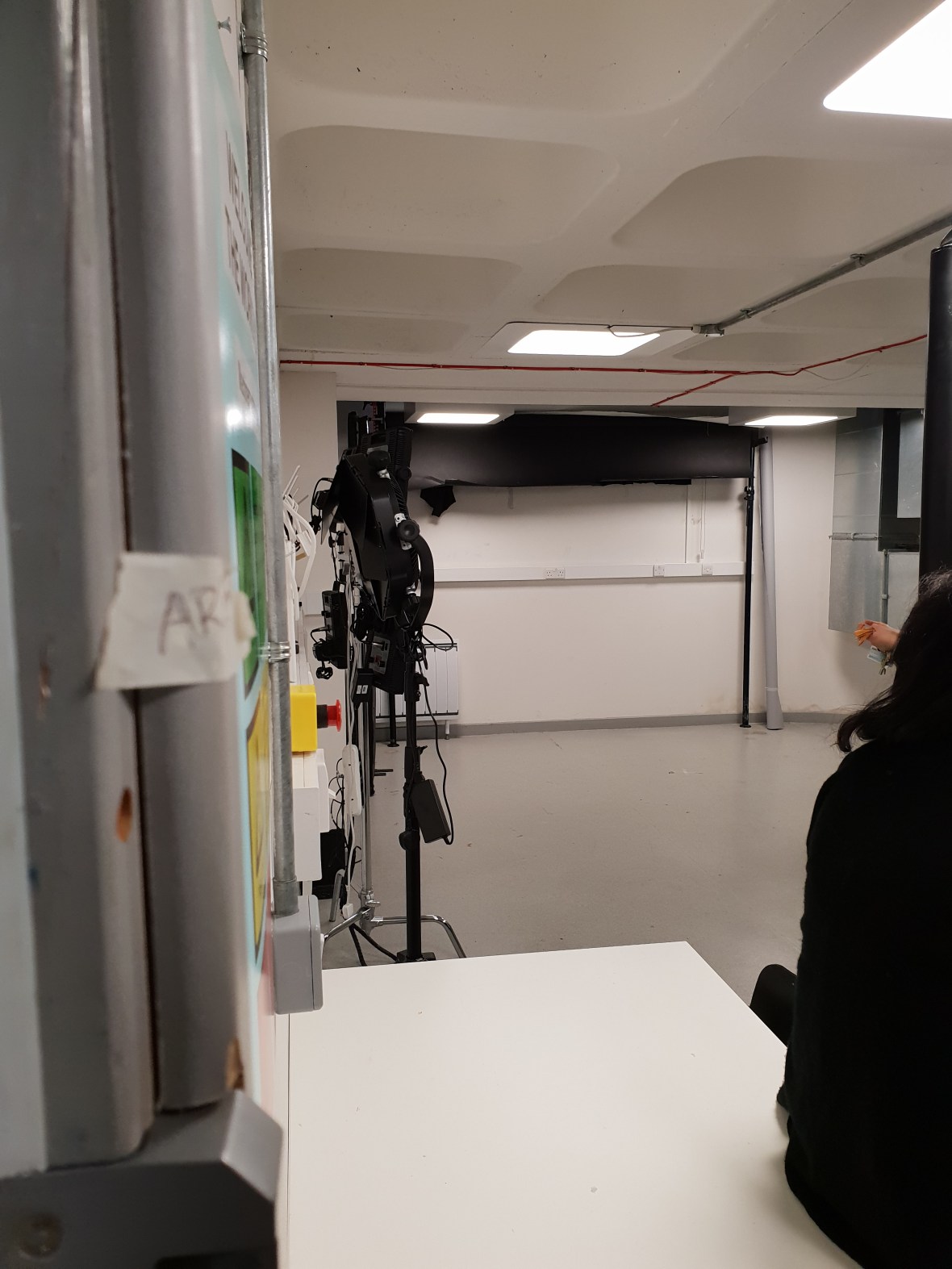
- Scanning Room
- Contains flatbed scanners
- Can scan film
- Contains a high quality archival printer
- Not free, charged online
- A4 = 4 pounds
- Matte
- Semigloss
- Inkjet
- Technicians check the files with you to make sure you’re doing it right


- The Finishing Room
- Equipment
- Lightbox to look at your negatives
- Machine to dry photos from darkroom
- Cutting boards and cutters
- Capabilities
- Fibre prints
- Printing on different surfaces (TRY MIRRORS)
- Equipment
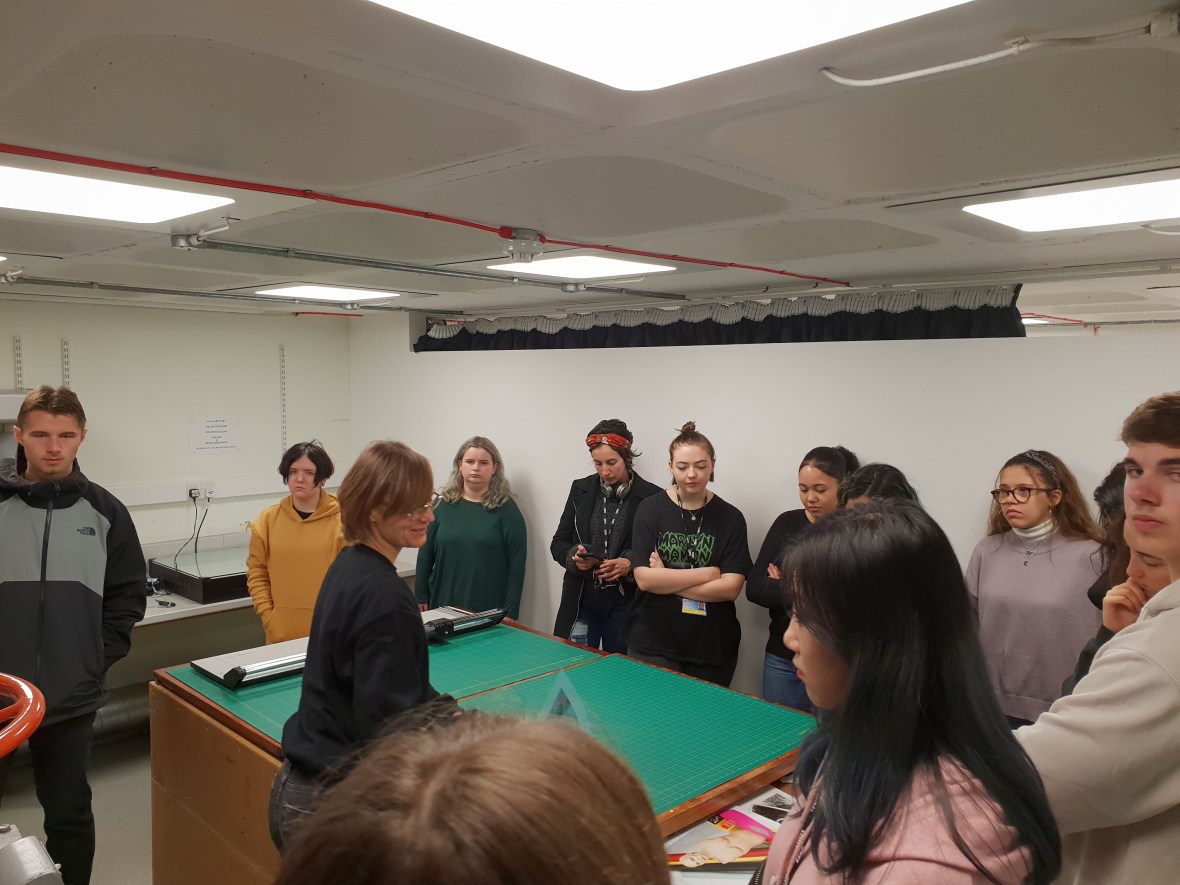
The Fundamentals of Photography
Why do we do photography?
- We capture the moment
- Create and generate memories
- We remember the photograph, not the memory itself
- For fine art purposes
- Sharing content and experience
- Documenting and creating historical record
- Define a sense of time and place
- Photographs are vehicles of emotion
- Advertising and idealising
- Promoting experience and situations across the world
- Photojournalism is more editorial
- Advertising lifestyle to sell products
- Politics and ideas
Truth or Lies
- Both
- Depends on the view of the photographer
- Photography was considered the only truth
- Now we are creating versions of the truth
- Telling a story
- As the author, you can choose the language and the tone
The Basics of Photography
- The first thing you need to create a photograph is light
- Light
- Light sensitive materials
- A material which responds when you expose it to light
- Clothing dye, like that in jeans
- Human skin, pigmentation and sunburns
- The word ‘photograph’ was coined by Sir John Herschel
- Means ‘painting with light’
- Responding and changing to light
- The Camera Obscura effect
- A darkened box with a convex lens or aperture for projecting the image of an external object on a screen
- This image is upside down
- You end up looking at a projection of the outside world in a darkened room
- Used as a phenomenon, then as a draftsman tool, and then became an attraction and the basis of photography
- A darkened box with a convex lens or aperture for projecting the image of an external object on a screen


http://www.youtube.com/watch?v=9Zu92DTo8bI (left top)
https://theheartofontario.com/event/the-midnight-sun-camera-obscura-project/ (right)
https://inhabitat.com/colossal-camera-obscura-frames-the-picture-perfect-dolomites/ (left bottom)
- The first photographs
- Based on Silver Halide chemistry
- Still the case today
- The silver halide chemistry goes black when exposed to light
- The pinhole camera
- Light sensitive material placed in black box
- ISO is the light sensitivity
- The correct amount of light
- There is a tiny hole made into the box and covered in black tape
- To take a picture, remove the tape for a designated exposure time and then cover the hole again
- Based on Silver Halide chemistry
- The Lens
- Iris
- Similar to the eye
- Aperture
- The aperture changes when the lens opens and closes
- You can achieve the same lighting with a high aperture and low shutter or vice versa
- Exposure
- You always need the right exposure to take a picture, so that the film or digital card is exposed to the light for the proper amount of time
- Shutter Speed
- The shutter gives a subject a stillness or a motion
- A fast shutter means capturing very sudden or fast movements
- A slow shutter results in a blur
- Iris
Basic Tricks and Techniques
- The illusion of movement
- Tracking and pursuit slot
- Follow the object
- Use a slow shutter
- If you move at the same speed as your subject, the background will appear blurred and it will seem like your subject is moving very quickly
- Motion blur
- Decrease the shutter speed
- What does not move will be in focus
- Like a billiards table
- Shutter speeds tell a story
- Tracking and pursuit slot
- Depth of field
- Means how deep the picture looks
- Deep DOF
- Use a small aperture and a high shutter
- Big number
- Shallow DOF
- Big aperture
 Karo.Design